Loomprovisations – luo-pu-minen

Kolmiosaisen teoksen lähtökohtana on luo-pu-minen. Luopuminen on pois heittämistä, jonkin taakse jättämistä, mutta samalla se tekee tilaa jollekin uudelle. Luopua-sana on johdos verbistä luoda, jonka on alkuaan merkinnyt mm. ’heittää, päästää käsistään’. Luominen  on matkantekoa, heittäytymistä improvisaatioon ja rytmiin, joka nousee tekijän ja materiaalien ihmeellisestä virrasta. Siinä virrassa aika pysähtyy, tekijä ja teos sekoittuvat suloisesti toisiinsa. Tähän tilaan päästäkseen on myös uskallettava pysähtyä ja luopua.

Kokonaisuuden  valmistumisen kannalta keskeinen elementti on isoisäni äidille kuuluneet kangaspuut, niin sanotut juuripuut vuodelta 1888.

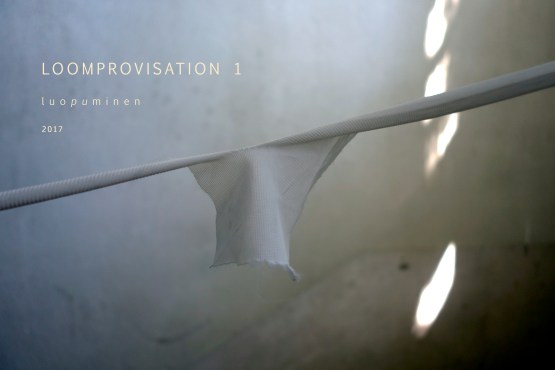
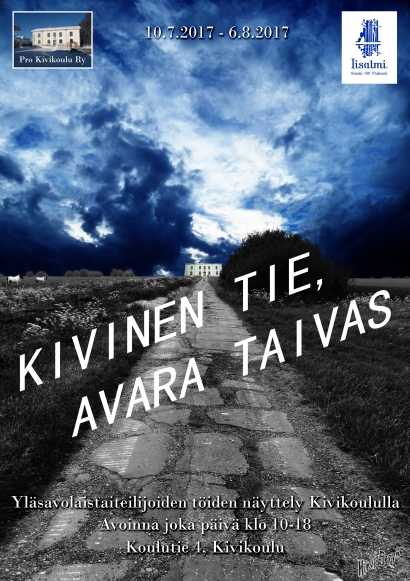
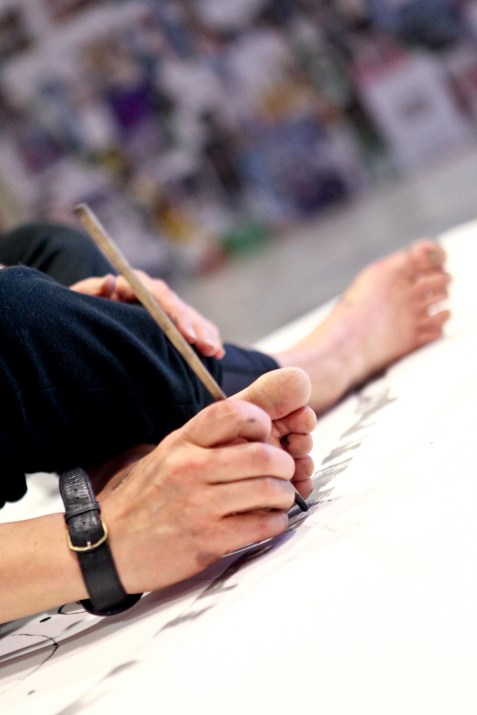
Teoskokonaisuuden ensimmäinen osa Loomprovisation 1 – Luopuminen on kudonnainen, johon olen repinyt ja kutonut 20 performansseissa tekemääni suurikokoista piirustusta. Teos syntyi tarpeesta istua alas: Uudelleen ajatella ja kuunnella omia ajatuksia. Kudonnainen on esillä Kivinen Tie – avara Taivas yhteisnäyttelyssä Iisalmen Kivikoululla heinäkuussa 2017.

Teoksen toinen ja kolmas osa  ovat nähtävillä Suonenjoen Kellarigalleriassa, Ars Liberan Juuret(on) – yhteisnäyttelyssä. Installaatio (Nimetön) ja Pitkäkestoinen piirros-improvisaatio Loomprovisation 2 – luominen, kokoavat kutoessa syntyneitä ajatuksia yhteen. Teosparissa tutkiskelen  luomista ja uudelleen järjestymistä – uudeksi tulemista.

Kiitos: Marke Vornanen, Aino Maria Väisänen(os. Hämäläinen) Simon Weetham ja Toni


luopuminen17


This summer: Group exhibition at my home town, Iisalmi

This summer I am glad to show some of my work in Iisalmi, my home town. The exhibition is at Kivikoulu between 10.7. – 30.7.2017

Artists:

Kaarina Kaikkonen
Arto Väisänen
Emma Fält
Petteri Tikkanen
Jenni Turunen
Antti Kääriäinen
Timo Tolonen
Olli Lähdesmäki
Juha Kuosmanen
Seppo Kääriäinen
Jussi Aulis
Jarmo Husso
Liisa Pirilä
Mikko Valtonen

You can read more about my work there from: luopuminen

Kivinen tie avara taivas Juliste

FROM MACRO TO MICRO AND BACK – workshop at BEK – Bergen


output_qIFEEI
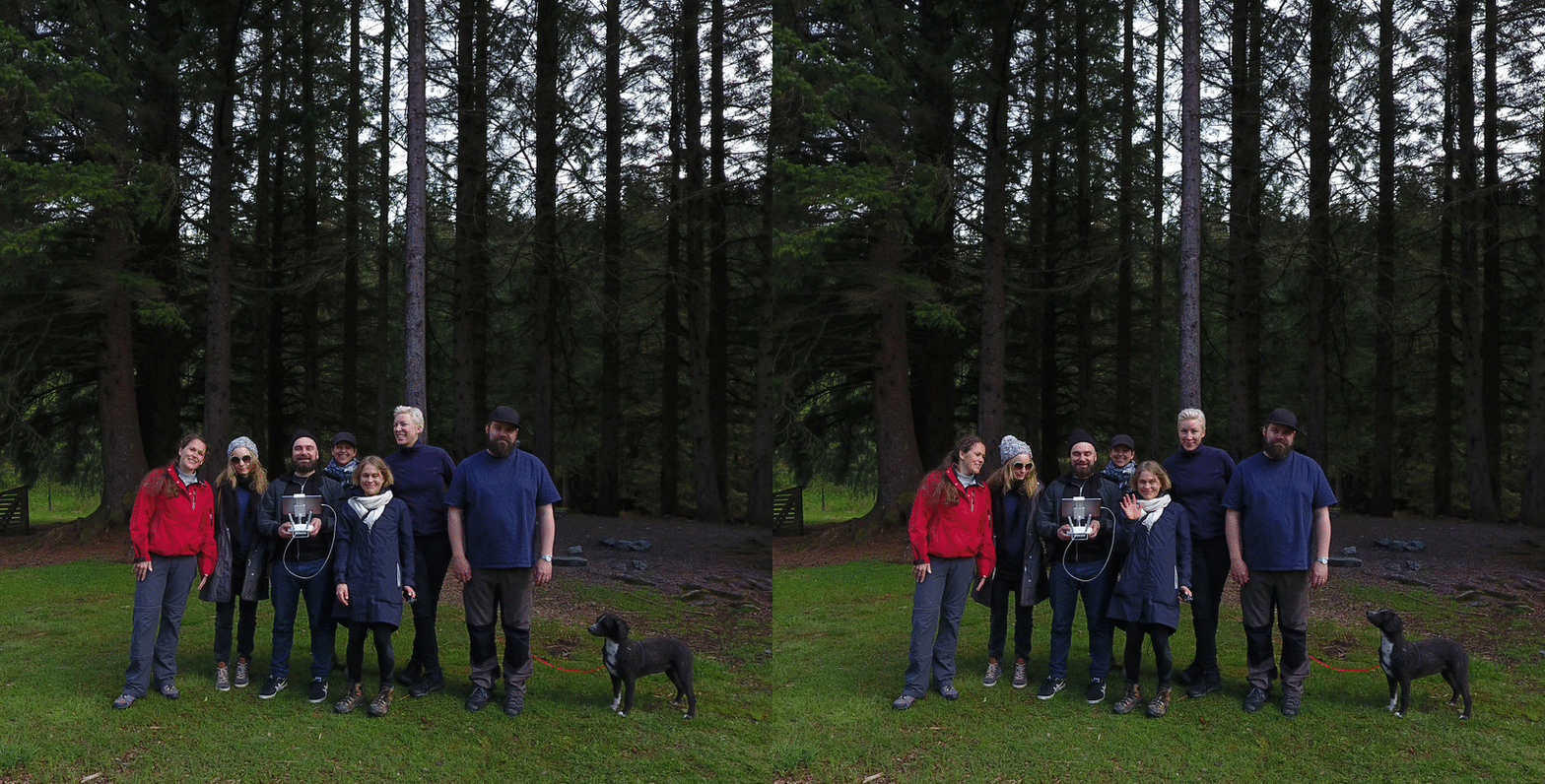
I was invited to BEK Bergen between 22.05.2017 28.05.2017 to work
with a  group of amazing and inspiring artists and thinkers:

22nd – 28th of May BEK organized the LAB FROM MACRO TO MICRO AND BACK, the physics and metaphysics of_________________distance. LAB is a practice-oriented concept for researching artistic and raw materials in collaboration. The project is made possible through the four-year EU-funded project Future DiverCities, where BEK is a partner.


more: http://bek.no/en/from-macro-to-micro-and-back/

https://www.facebook.com/BEKBergenCenterForElectronicArts/

about the Eu-project: http://futuredivercities.eu/

Moks – memories, yearbook 2016

Hei,

Vuoden 2016 Moks-residenssin vuosikirja on julkaistu. Työskentelin residenssissä jo toisen kerran ja osallistuin OMEGA 3 – ryhmänäyttelyyn. Kiitos Evelyn ja John!

New Moks yearbook 2016 is published. It was second time I worked there. I participated to the group exhibition last year. Thank you Evelyn and John!

Aukaise alla olevasta linkistä/ Link:

moks-2016_final

Updates

Hei,

Matkojen ja studiotyön jälkeen tulossa on päivityksiä. Pysykää kuulolla!

Tulossa:

  1. Uusi video dokumentointi (Salaista – piilotetun käännöstyöstä 2016) julkaistaan pian!
  2. Portfolio päivittyy –  helposti ladattava pdf-versio.
  3. Kuva-arkisto: 2010-2017 Works on Paper
Between Spaces 5798
Björn G Lindahl Supermarket Art Fair 2017

Hello,

After traveling, studio-work and exciting adventures to meet my colleagues in Australia, there will be many updates on my webpage. Stay tuned!

Updates:

  1. New Video from the performance Secrets – translating the hidden (2016 at Sotku, Kuopio)
  2. Portfolio updates and printable pdf.
  3. Photo archive: Works on Paper 2010-2017


Replies to Silent questions and comments

Our apologies for our recent silence, in terms of not replying to your queries – we have had a lot of interest in the project. Here are replies to some of your queries, rather than answer all individually. Thank you so much for your interest. We are hatching plans to run more workshops. In fact it is very short notice but there is a DoBeDo party on Koh Mak island, Thailand this evening 5pm sunset, Thai time. You are very welcome!

Do let us know if you are inspired to run a DoBeDo. You can use our skeleton guide. We would love details of how your Do Be Do goes, and your students’ / party goers’ feedback.

Our replies:

Hello Emma and Angela,

I’m interested in knowing more about the student responses to the silent drawing party. Am particularly interested in the use of the masks.

Best regards,

Katie Ries


Hi Katie

We have some feedback from the students – written, drawn and recorded discussion provided after the party. We will transcribe and post asap.

But in summary they were very positive about it. Particularly one student who is autistic, who said that it was a relief and a normal day for her, in that it was a natural way for her to communicate and that words are a struggle. I think that it probably lessened the sensory overload for her, by excluding chatter.

Re the masks: we wanted to exclude facial gestures, to focus the communication into their drawing.

We spent a day preparing together for the party / do, discussing the rules we would follow, and making our masks. We also did preparatory self-portrait drawings and poems, to explore differences between verbal and visual communication.

An interesting aspect was that we agreed to try not to even use words ‘inside’ our heads – so that it would become as non verbal as possible. But afterwards several students said that they had forgotten that and had been quite focused on verbal thoughts and how they might translate into visual.  Next time we run this we are going to weave our way more slowly from verbal to visual, with a day WITH verbal thought, and then trying out ways to minimise verbal thought, and see how differently we communicate without words.

We have a 3 day DoBeDo coming up in a mill house in Normandy, France in April. Dates to be confirmed shortly.


Name: Alejandro Quiroz

  • Comment: I would like to know more about this project, Since I am working out on a research using drawing as an educational & comunicational tool with people with intellectual disability. While drawing offers a wide fields of art practices I believe it could develop as well other skills related with cognitive, motor, perceptual and affective issues. My best!

Dear Alejandro

Please follow this blog, to receive updates on the project. I am researching drawing for people who are non verbal – specifically those with autism, dementia and stroke damage.  Exactly, drawing is not just for art, it is a motor and perceptual and cognitive skill. We post any current research we can find on this on the Facebook page Thinking through Drawing

https://www.facebook.com/drawingandcognition/

Where are you working?

Do keep in touch, and we can further discuss the role and potential of drawing.

Angie

3) Name: Thomas Bosket

Comment: How did the masks help?

Reply: Students said they liked not always knowing who each other was. They said they formed new bonds with other students. It was v interesting that some who identify as social and quite extrovert said they found the whole experience a bit uncomfortable and anxious-inducing. Others felt MORE comfortable than usual at a party. I think the masks helped a lot by not allowing communication by facial gestures. I was also surprised that hand and body gestures seemed not to come into play very much – the students really did use drawing to communicate, e’g. leading one another by lines around the party. Rather than communicate ideas, students said they felt like much of the time they were playing – often by mirroring one another. I was interested in what a visual version of ‘interrupting’ might be. It connects with what we have been doing in the Drawing Circles, responding to one anothers’ drawings, sometimes drawing ON, through, in each others’ drawings. These students were pretty ready to draw over and / or erase one anothers’ work –  Emma had already done a few weeks of collaborative drawing with them, so they were very primed.

4)

Name: Susan Beniston


Comment: Dear Angie and Emma,

Hope this finds you well. Thanks for sending this post – it looks really great, most intriguing x the collaboration of 18 students…

If you have more info on the process, or the structure I would love it. Even links would be more than fine – if you can do so, please send me some more? I have 150 students this term, 32 in each studio section and they are far from silent – so this is inspiring.

Hard to believe its almost been a year since, We ALL Draw. I wish I could have participated in ALL the great workshops, that were given… Still it was a great hit, and is well-worth-savouring.

Kudos on your latest research and HeARTY Cheers to you both!!

Susan


Reply:

Thanks so much Susan!

We have written up some notes here on the structure we used. See https://emmafalt.net/2016/10/10/drawing-in-silence/

However you can just go ahead and see what happens. The main thing was that we spent a day with the students devising our silent rules together. I like the idea to have one or two part hosts though, as then they have a special role, introducing people to one another and trying to help them feel welcome and comfortable. Without officially agreeing this I felt that I took on this role. One student said she was grateful that I introduced, by drawing a line for her to follow, to a group of people drawing together, as she was feeling awkward and didn’t know how to join in.

I hope you try it. And do please let us know how it goes.

Btw the symposium proceedings with workshop details from WAD will be ready very soon.

5)

Name: Anne

Comment: My husband has a severe TBI. We are both artists. Primarily we draw. Now, after his accident we draw. I believe it is helping mend his brain.

I would love to discuss this more with you…

Angie

6)

Name: ranasamir

Comment: Hi Emma,

Looks like a great idea. Just wondering if you could comment on the actual process? I see the pictures you have but were the participants instructed before the activity? Was there a theme? What did the actual communication between two individuals or within group look like?

Thanks.

Reply: Hi. We will post more about the process soon, once we have transcribed the audio of the feedback. See https://emmafalt.net/2016/10/10/drawing-in-silence/ for more details about the process and structure. There was no theme – we agreed to have a silent party and to try to communicate by drawing alone. The communication looked like marks, lines, some representational images. There was a lot of colouring in, adding to images, erasing. It was ever changing on the paper, images often disappeared, were overlayed, erased. It was dynamic and physical, felt an embodied way of communicating.

Angie